
The phrase no production code is doing a lot of work in that headline, and I want to deal with it honestly before anything else, because the version of this story that circulates in automation communities is usually missing the part that makes it actually interesting. Marcus, who runs a boutique software consultancy in Austin selling productised services to SMEs, built his entire internal operations stack on n8n. Proposal generation, contract delivery, invoice creation, client onboarding sequences, internal Slack notifications, time tracking aggregation, revenue reporting. All of it running through n8n workflows on a self-hosted instance. No custom application code deployed to any server. The caveat, which he told me directly and which the Twitter thread version of his story omits entirely, is that there is JavaScript in nearly every other Code node in his workflow stack.
He did not write production code. He wrote logic. Those are different things in ways that matter.
I bring this up not to diminish what he built, which is genuinely impressive in scope and coherence, but because the no code framing sets a false expectation for anyone trying to replicate it. When I looked at his n8n instance during a call where he was walking me through the proposal generation flow, the Code node handling the document assembly was about sixty lines of JavaScript. Clean JavaScript, not complex, but JavaScript. The IF nodes upstream of it were doing conditional routing based on client tier, which he had set up using expressions that required understanding how n8n’s expression syntax accesses nested JSON properties, which is its own small learning curve that the documentation presents as intuitive and is not, particularly when the data coming in is from a webhook that formats arrays differently depending on which upstream service triggered it.
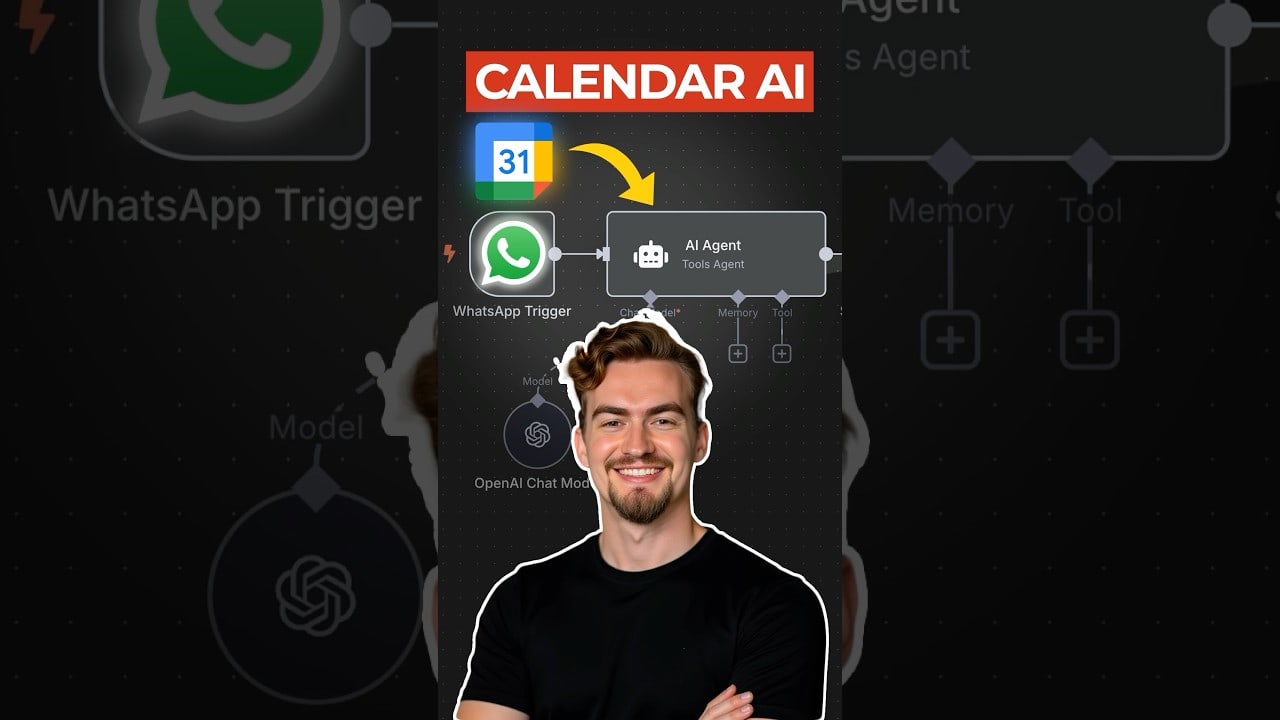
The proposal flow itself starts with a Typeform webhook, which lands in a Set node that normalises the field names because Typeform’s field IDs in the JSON payload are UUIDs rather than human-readable strings, and nobody wants to write expressions with UUID field names forty times in a workflow. From there it hits an HTTP Request node pointed at an OpenAI endpoint that generates a first-draft scope section based on the project type and budget range the client submitted. The output of that goes into a Code node that formats it into the structure his Notion database expects, then a Notion node creates the proposal document, then another HTTP Request node hits a PDF generation API to render it, and finally a Gmail node sends it to the client with the PDF attached.
That sequence sounds straightforward written out. It was not straightforward to build. The Notion node in particular has a gap between what the documentation shows and what the API actually returns that cost Marcus two days, and he described the experience in terms I recognised immediately. The node’s output looks correct in the n8n interface. The data is there. But accessing deeply nested properties from Notion’s block structure inside a subsequent node requires understanding that some of what looks like flat JSON in the output panel is actually being stored as objects with type fields inside, and if you try to pass it directly into a template expression you get either undefined or the literal string [object Object] depending on which version of n8n you are on. The fix is a Code node that explicitly maps what you need before anything downstream touches it. The documentation does not mention this. I know about it because I hit the same wall with a different Notion integration eight months ago and spent an afternoon in the Discord before someone who had also hit it explained what was happening.
The thing Marcus actually built, stripped of the framing, is a well-architected internal tooling layer using n8n as the orchestration layer and APIs as the service layer. That is a legitimate architectural pattern and he has executed it thoughtfully. His error handling is better than most production n8n setups I have seen, with every external API call wrapped in a Try node and failures routing to a Slack notification with enough context to debug without re-running the whole workflow. His credentials are managed properly, his instance is behind a properly configured reverse proxy with SSL, and he backs up his workflow exports to an S3 bucket on a schedule via, naturally, another n8n workflow.
What he did not do is build a custom application with a database schema and an API layer and a deployment pipeline. That is real. And for a solo operator running a service business under a hundred clients, it may well be the correct choice. The operational overhead of maintaining a custom application is not zero and the things n8n cannot do for his use case have not materialised yet.
LangChain, which he tried briefly for a more complex AI routing problem in his onboarding flow, he abandoned after two weeks. His description of the experience matched mine: the abstractions that make LangChain feel powerful in a tutorial dissolve when you need to understand exactly what is being sent to the model and why the output changed between runs. n8n’s HTTP Request node pointed directly at an OpenAI endpoint is less elegant and more debuggable, and debuggable wins every time when the workflow is client-facing.
The honest version of built his business on n8n without writing production code is that he built a well-considered internal automation layer using a tool that rewards people who understand data structures and are willing to read error messages carefully.
That is a smaller claim than the headline. It is also a more useful one.

Olaitan Oladipo holds a BSc in Sociology from Olabisi Onabanjo University. He is a self-taught automation builder who has spent years inside n8n doing the work that most tutorials skip: debugging OAuth errors at 2am, migrating client automations from Make.com mid-project, fighting reverse proxy misconfigurations on AWS EC2, and figuring out through trial and error what actually holds up in production versus what only looks clean in a demo.
He is not a developer by training and not a SaaS founder. He is the person in the Discord server who actually answers the question instead of linking to the docs.
His writing on n8n Automation Tutorial covers self-hosting, AI agent workflows, tool comparisons, and the security vulnerabilities the automation industry would rather not discuss. He has built AI-assisted invoice approval flows using OpenAI function calling, connected Claude via HTTP Request nodes, and holds considered opinions about Zapier, Make.com, LangChain, and CrewAI that their marketing teams would not appreciate.
He writes for people who are technical enough to follow a tutorial but experienced enough to want the honest version.