
The workflow had been running clean for six weeks. Forty-three nodes, three HTTP Request calls to external APIs, an OpenAI function-calling block in the middle that was doing document classification, and a final Webhook response that pushed structured JSON back to a client’s internal dashboard. Then at 2:47am on a Tuesday it stopped. Not with an error. It just stopped. No execution log entry, no failure notification, nothing in the n8n output panel except a last successful run timestamp from four hours earlier. I spent forty minutes thinking it was the OpenAI rate limit before I found it: the Docker volume where n8n was writing its SQLite execution data had hit the storage ceiling on the EC2 instance, and the whole process had silently terminated rather than throwing anything catchable. The documentation does not mention this. The community forum has one post about it from 2022 with two replies, neither of which solved it.
That is what self-hosting actually feels like. Not the clean architecture diagram. That.
I want to talk about the $5.2 billion valuation because I think most of the coverage has completely missed why it is credible, and I say that as someone who was building on n8n when the self-hosted setup guide still had a step that told you to run it directly with Node without any mention of process management. The valuation is not a bet on a better Zapier. It is a bet on something structurally different, and the difference matters more now than it did two years ago.
Zapier is a tax on not wanting to think. I mean that precisely, not as an insult. It works, the UX is genuinely well-designed, and if you need to connect Typeform to Mailchimp and you need it done in fifteen minutes, it is the correct choice. But the pricing model is built on the assumption that your automations will stay simple, and the moment they do not, the task counting starts to feel like death by a thousand small invoices. I had a client running a lead enrichment flow on Zapier that was costing them four hundred dollars a month in tasks because one step in the middle was doing a lookup that triggered three downstream actions per record. Moving it to n8n, same logic, cost them the EC2 instance and about two hours of my time. That is the conversation that keeps happening across the community, and Zapier does not have a structural answer to it.
Make.com is a more interesting competitor and I will give it its due: the visual canvas is genuinely better than n8n’s for certain types of complex branching logic, and the module library is wider on the long tail of SaaS integrations. Where it falls apart is exactly where most serious automation work lives, which is when you need to write conditional logic that references earlier node outputs across multiple branches, or when you need to process a payload that is not shaped the way the module expects and you need to reshape it in-flight. Make’s built-in tools for that feel like they were designed for the demo, not the production edge case. I migrated a client’s quote-approval workflow from Make mid-project because the iterator handling was doing something to array indices that I could not explain and neither could support. Rebuilt it in n8n in a Code node with about twenty lines of JavaScript and it has not touched me since.
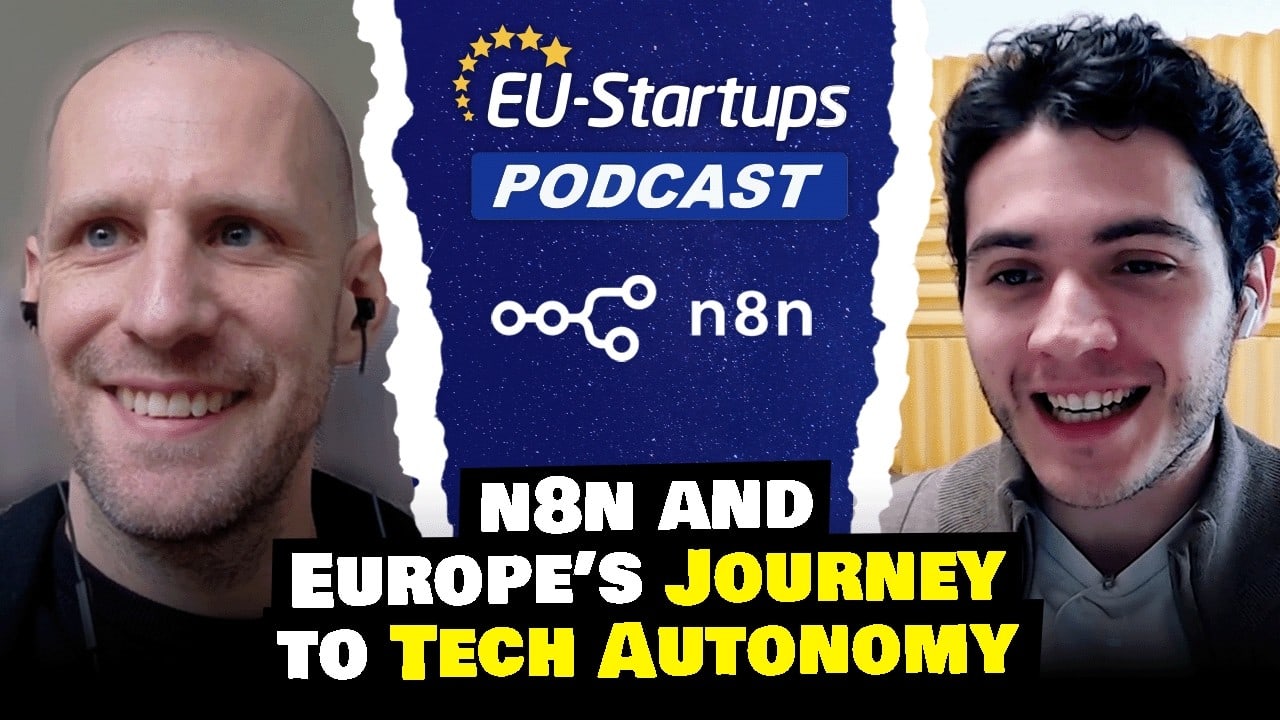
The AI integration story is where the valuation argument gets real. I have connected n8n to OpenAI using function calling, to Claude via a standard HTTP Request node with the Anthropic API, and to a self-hosted Ollama instance for a client who had data residency requirements. The HTTP Request node is not elegant but it is completely controllable, and when something breaks you know exactly where to look. The LangChain nodes that n8n shipped are technically interesting but I would not put them in a client-facing workflow yet. The abstractions that make LangChain appealing in a demo are the same abstractions that make the failure mode opaque in production. When a chain breaks and the error is coming from three layers inside an agent executor, you are not debugging n8n anymore, you are debugging LangChain, and that is a different and worse problem.
What Jan Oberhauser built, and what the Series B and C investors are actually betting on, is the idea that the next several years of enterprise software involve companies wanting to run automation infrastructure they own rather than rent, with the ability to extend it with code when the no-code layer runs out. That thesis is correct. I have watched it become correct in real time, through the specific experience of clients asking whether their workflow data is leaving their infrastructure, through GDPR conversations that ended with someone spinning up a self-hosted instance, through the general anxiety about SaaS vendor lock-in that started as a startup concern and has now reached mid-market procurement conversations.
The $5.2 billion number will look either prescient or embarrassing depending on whether n8n can hold the self-hosted community while also building an enterprise cloud offering that does not alienate the people who chose it precisely because it was not a cloud offering. That tension is real and it is not resolved yet.
The valuation is not the story. The fact that the tool is genuinely useful in production, in ways that its competitors are not, is the story. The money followed that. Not the other way around.

Olaitan Oladipo holds a BSc in Sociology from Olabisi Onabanjo University. He is a self-taught automation builder who has spent years inside n8n doing the work that most tutorials skip: debugging OAuth errors at 2am, migrating client automations from Make.com mid-project, fighting reverse proxy misconfigurations on AWS EC2, and figuring out through trial and error what actually holds up in production versus what only looks clean in a demo.
He is not a developer by training and not a SaaS founder. He is the person in the Discord server who actually answers the question instead of linking to the docs.
His writing on n8n Automation Tutorial covers self-hosting, AI agent workflows, tool comparisons, and the security vulnerabilities the automation industry would rather not discuss. He has built AI-assisted invoice approval flows using OpenAI function calling, connected Claude via HTTP Request nodes, and holds considered opinions about Zapier, Make.com, LangChain, and CrewAI that their marketing teams would not appreciate.
He writes for people who are technical enough to follow a tutorial but experienced enough to want the honest version.